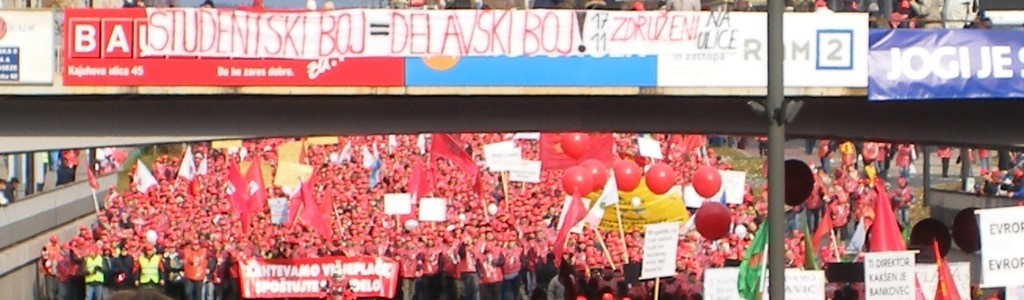
To mark International Women’s Day on 8 March, trade unionists across Europe called for a swift adoption of the EU Directive on work-life balance. EU legislation in this field will boost women’s employment opportunities and enable a more equal distribution of parental leave between partners.
European Commission Social Fairness Package
The European Trade Union Confederation has welcomed the European Commission’s Social Fairness package. In ETUC General Secretary Luca Visentini’s words, “These initiatives should bring some real improvements for working people and ensure that the principles of the European Pillar of Social Rights are implemented through binding measures that make a positive difference to people’s lives. It’s a step forward which the ETUC welcomes as far as it goes”. Part of the package is the proposal of a European Labour Authority (further information available here) and access to social protection.
ETUC position on the proposed Employment Guidelines revision
The Commission has published a proposed revision to the Employment Guidelines, which is to be adopted at the June 2018 EPSCO Council. The ETUC welcomes the intention of revising the guidelines to reflect the important achievements contained within the EPSR. However, it sustains that these achievements are not always accurately reflected in the proposal put forward. Here you have the ETUC position on the proposed Employment Guidelines revision- which was adopted at its Executive Meeting of 7-8 March 2018 in Brussels.
Minimum Wage Report 2018
In recent months, the call for a minimum wage that will secure decent living standards has gained prominence across Europe. To name but a few examples, the European Pillar of Social Rights includes a commitment to adequate minimum wages; French President Macron has underscored the importance of the European social model, and the new German government now endorses a European-level framework on minimum wages. Against this backdrop, the WSI Minimum Wage Report 2018 offers a comprehensive analysis of current minimum wage developments in Europe and beyond. It highlights that countries such as Germany still have scope for more ambitious increases.
ECJ rules that Intra EU ISDS are incompatible with EU law
The arbitration clause on the agreement between the Netherlands and Slovakia on the protection of investments is not compatible with EU law. Read the press release. The judgment goes against the opinion of Advocate General Wathelet, who maintained the opposite. It remains to be seen what consequences the judgement will have on the ECJ’s opinion on the ICS compatibility with EU law in CETA, and on the MIC proposal. Read Bernd Lange’s reaction.